

An annual insurance premium does not become an emergency because it arrives as one large bill. A sudden loss of income remains a financial shock even though you can estimate the monthly bills it would leave uncovered.[1][2][3]
That distinction determines how to save. A sinking fund is cash assigned to a foreseeable expense that is not paid every month. An emergency fund is a protected reserve for genuinely unplanned costs and income disruptions. Calculate the first from known future obligations and the second from essential spending and household risk. Keeping the targets separate prevents predictable bills from repeatedly draining the money intended for true disruptions. “Sinking fund” is a common budgeting label rather than a standardized federal consumer-finance term.[1][2][3][6]
Sort expenses by whether you could see them coming
Size and urgency do not determine the category. A large property-tax bill can be foreseeable, while a relatively small urgent medical expense can be a genuine surprise. Instead, consider whether you could reasonably expect the cost, estimate its timing or range, and recognize it as a normal responsibility of owning a home or car, raising a family, working, or paying taxes.[1][2]

| Question | Likely sinking-fund expense | Likely emergency-fund expense | Gray area |
|---|---|---|---|
| Could the household reasonably expect it? | Annual or semiannual insurance premiums, property taxes, school clothes, gifts, or memberships | An abrupt job loss or sudden storm damage not immediately covered by insurance | A repair may be expected in general but impossible to time precisely |
| Can you estimate a date or cost range? | A documented estimate for planned medical care or an expected tax payment | An urgent medical cost that could not reasonably be anticipated | Planned medical care can still produce an uncertain final out-of-pocket amount |
| Is it a normal cost of ownership or household life? | Routine vehicle service, replacement planning, or ordinary home maintenance | A necessary repair that exceeds normal maintenance expectations | Older cars and homes may need both maintenance funds and an emergency backstop |
| Is income being interrupted? | Cash reserved for a known seasonal slowdown or planned unpaid leave | An unexpected layoff or abrupt loss of household income | Workers with variable income may need both planned cash-flow reserves and emergency savings |
Car and home repairs show why the line is not absolute. Oil changes, tires, inspections, minor plumbing work, and other recurring ownership costs belong in a maintenance sinking fund. A sudden transmission failure or major storm repair might exceed any reasonable maintenance estimate. In that case, the sinking fund pays what it can, and the emergency reserve covers the remaining shock. Medical costs can work the same way: planned care may warrant dedicated savings, while an abrupt uninsured expense may require the emergency fund.[1][2]
Build sinking funds from the bills your monthly budget misses
Generic category lists can help you brainstorm, but your own records provide a better starting point. The Consumer Financial Protection Bureau advises looking back at spending history so less-frequent costs – such as insurance, medical expenses, school clothes, seasonal purchases, and gifts – do not disappear from the budget.[2]
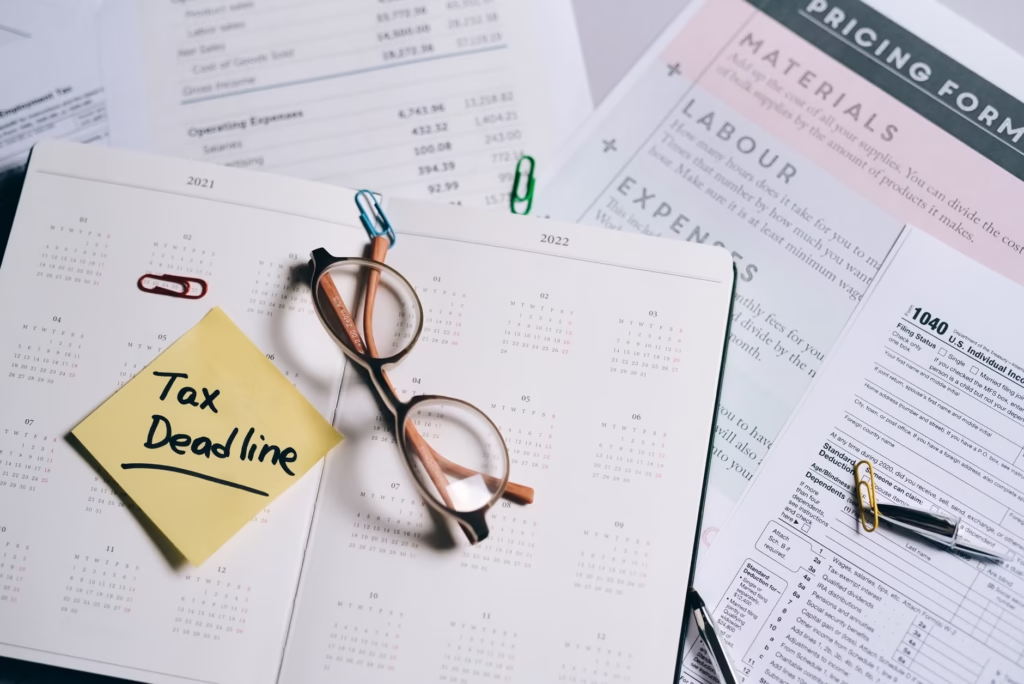
- Review six to 12 months of checking and credit-card statements, insurance records, tax documents, and calendar entries. Mark costs that did not occur every month.
- List each foreseeable nonmonthly expense. Record its expected cost or range, due date or likely season, amount already saved, and the number of months remaining.
- Calculate the monthly contribution for each category: (expected cost – amount already saved) ÷ months until the money is needed.
- Add the contributions together and compare the total with the amount your budget can support. If the total does not fit, distinguish required bills from optional plans before changing the targets.
Not every category needs a precise due date. You might know exactly when an insurance premium is due but use a rolling annual target for car maintenance. The goal is deliberate funding, not perfect forecasting. Update the amount when prices, schedules, or household plans change.[3][6]
Set the emergency-fund target around risk, not a slogan
No single number of months is right for every household. The CFPB says the amount needed depends on your circumstances and experience with unexpected expenses. Start by calculating the essential monthly costs that would continue during an income interruption.[1][3]
- Housing and basic utilities
- Groceries and essential household supplies
- Transportation needed for work and daily life
- Insurance premiums
- Minimum debt payments
- Necessary child care
- Essential health care and medications
A larger reserve may make sense when your household relies on one income, has seasonal or irregular earnings, supports dependents, faces weak job security, carries high insurance deductibles, or depends on a car for work. An older home, a potentially long job search, or limited support from family can also increase the amount of protection worth building.[1][3]
Stable dual income, low fixed expenses, reliable benefits, lower deductibles, and other accessible household resources may support a more modest initial target. These factors do not eliminate the need for emergency savings; they affect the size and urgency of the goal.[1][3]
For illustration, a household with $3,200 in essential monthly expenses might decide that three months of income-interruption coverage fits its risk profile. That produces a $9,600 target. Another household with the same expenses could reasonably choose a different amount because its income stability, insurance, dependents, and other risks differ. For a fuller assessment, see [How Much Money Should You Keep in an Emergency Fund?](https://financeupgradelab.com/how-much-money-should-you-keep-in-an-emergency-fund-3/).[1][3]
When cash is limited, fund deadlines and preserve a backstop
A new category system cannot create surplus cash. If a known bill is due soon, it is an immediate cash-flow obligation – not automatically a reason to drain the emergency fund without examining alternatives. Put imminent insurance, tax, medical, or required transportation costs into the plan first. Then direct available savings toward the most time-sensitive shortfalls while preserving whatever emergency cushion is realistic.[1][2][6]
If you have no emergency savings, begin building a small protected reserve while also funding unavoidable near-term obligations. The allocation depends on due dates and consequences. A required insurance payment due next month deserves different treatment from an optional trip planned for next year.[1][3]
When normal income cannot cover monthly bills plus known irregular costs, the problem is a budget gap, not a lack of discipline. Possible responses include postponing optional expenses, changing bill dates, asking providers or creditors about payment arrangements, reducing costs where feasible, and revisiting income or debt obligations. A category system can organize available cash; it cannot repair a persistent deficit.[6]
Self-employed workers and others who need to make estimated tax payments should treat them as foreseeable obligations. The usual federal due dates are April 15, June 15, September 15, and January 15 of the following year, subject to weekend, holiday, and other adjustments. Check the IRS schedule for the applicable tax year and determine the obligation based on your own tax circumstances.[5]
Separate the money without opening a dozen accounts
Separate accounts can make the boundaries easier to see, but they are not a financial requirement. The nonnegotiable part is knowing how much of the total balance is committed to each purpose.
- Use one savings account and maintain a written ledger showing the emergency reserve and each sinking-fund balance.
- Keep one emergency savings account and a second account containing all sinking-fund categories.
- Use labeled bank subaccounts or savings buckets if your financial institution offers them.
Keep emergency savings and near-term sinking funds safe and readily accessible rather than exposing money needed soon to volatile investments. At an FDIC-insured bank, the standard deposit insurance amount is $250,000 per depositor, per insured bank, for each account ownership category. If you hold large balances or use multiple ownership categories, verify how the coverage rules apply to your accounts.[1][4]
Recurring transfers timed to paydays can make contributions more consistent. Check your available checking balance before automating them so a savings transfer does not cause an overdraft. If you are comparing places to hold short-term cash, read [High-Yield Savings Accounts: Are They Worth It?](https://financeupgradelab.com/high-yield-savings-accounts-are-they-worth-it-14/).[1]
Reset your savings categories in 30 minutes
- Pull the last six to 12 months of bank and credit-card statements, along with a calendar showing the next year’s known bills.
- List each nonmonthly cost. Assign foreseeable expenses to sinking funds and reserve the emergency category for financial shocks. Give each sinking fund a target date, season, or funding range.
- Calculate the monthly contribution for every sinking fund, then total the contributions.
- Calculate essential monthly spending and choose an emergency-reserve target that reflects income reliability, dependents, insurance, job risk, and likely surprise costs.
- Compare the combined savings requirement with your actual monthly surplus. If it does not fit, adjust dates, spending, or optional plans instead of treating the shortfall as an emergency.
- Set transfers for the next payday, label every balance, and review the categories after a large withdrawal, income change, move, new dependent, or other major household change.
If this exercise shows that cash reserves, debt payoff, insurance, and retirement contributions are competing for the same dollars, sequence those priorities rather than funding every target blindly. [A Complete Financial Checklist for Your 20s, 30s, and 40s](https://financeupgradelab.com/financial-checklist-20s-30s-40s-20/) can help you decide what to address next.
Sources and references
- Consumer Financial Protection Bureau: An essential guide to building an emergency fund
- Consumer Financial Protection Bureau: Assess your spending (2024-12-12)
- Federal Deposit Insurance Corporation: Saving for the Unexpected and Your Future (2025-01)
- Federal Deposit Insurance Corporation: What We Do
- Internal Revenue Service: Publication 505 (2026), Tax Withholding and Estimated Tax (2026)
- Consumer.gov: Making a Budget (2024-08)