
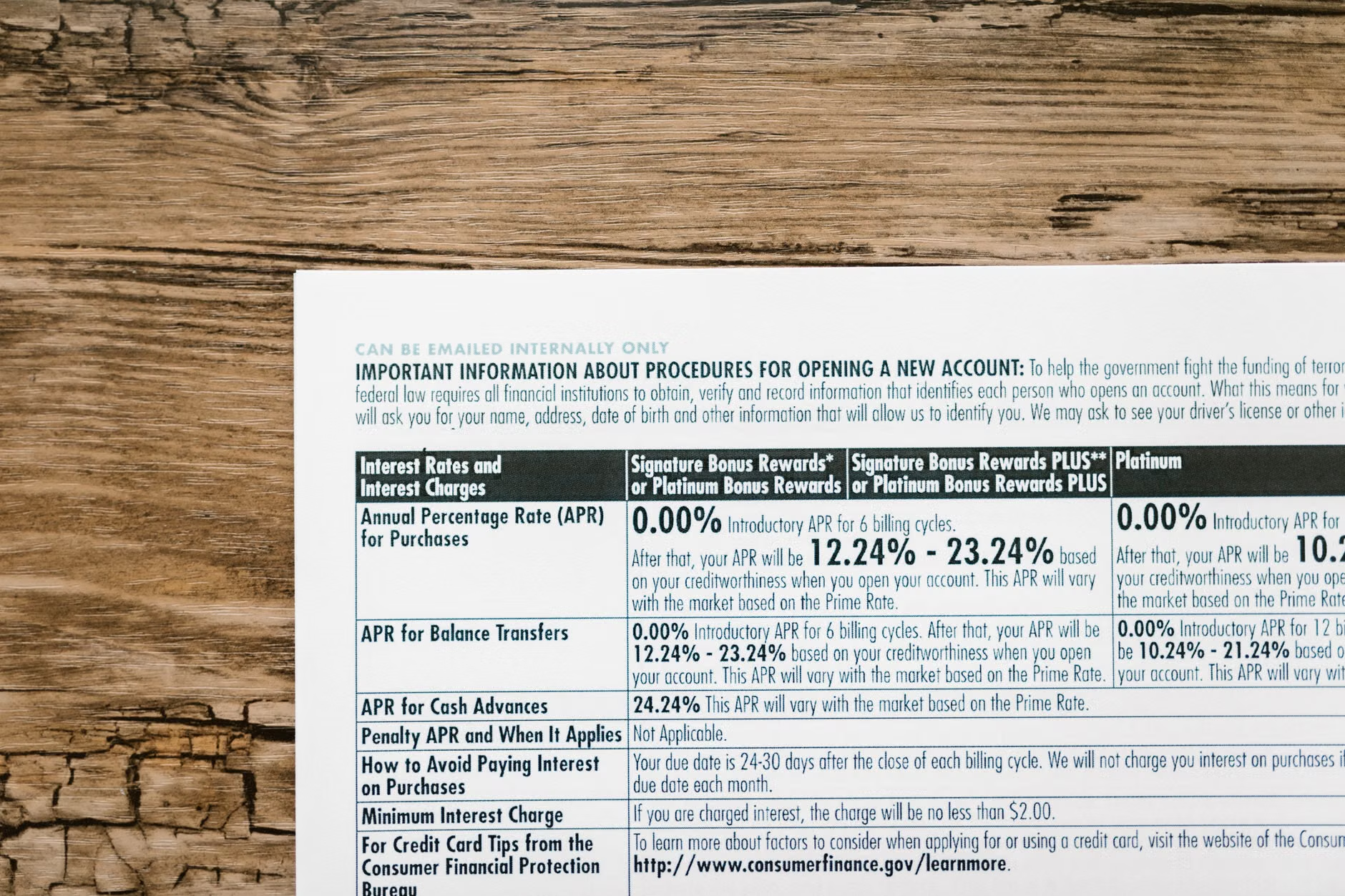
Credit card debt usually sticks around for two reasons: the balance keeps growing, and interest keeps charging quietly in the background. Many issuers calculate interest daily based on the average daily balance, so paying debt off faster is not only about paying more. It is also about paying earlier, aiming extra cash at the right balance, and lowering the rate whenever possible. (consumerfinance.gov)
The fastest payoff plans attack spending, APR, and timing
A plan works faster when it does three things at once: stops new charges, protects every minimum payment, and pushes the rest toward principal. Minimum payments keep the account current, but they are rarely enough to clear a balance quickly. And if one card includes balances with different APRs, the amount paid above the minimum generally must be applied to the highest-interest balance first. That is why interest rate, not just balance size, matters so much. (consumerfinance.gov)
Seven strategies that actually shorten the timeline
- Stop using the card you are trying to eliminate. If new charges keep landing on the account, part of every payment is just chasing fresh debt instead of reducing the old balance. In practice, removing the card from saved online payments or digital wallets can matter as much as increasing the payment.
- Put every minimum payment on autopay. Missing the minimum can trigger late fees, damage your credit history, and in some cases cost you a promotional rate. A faster payoff plan falls apart if it first becomes a more expensive payoff plan. (consumerfinance.gov)
- Choose one target card for all extra money. In most cases, the mathematically faster move is the avalanche method: pay the highest-APR card first after covering all minimums. If motivation is the real problem, the snowball method, which starts with the smallest balance, can still be useful. The key is not to split extra money evenly across every card for months with no clear win. (consumerfinance.gov)
- Make extra payments earlier in the month, or even twice a month. Because interest is commonly calculated daily, cutting the balance sooner can reduce the amount of interest that keeps accruing. CFPB guidance also notes that paying before the due date can help lower interest when you are carrying a balance. (consumerfinance.gov)
- Ask the issuer for a lower rate or a hardship arrangement before you fall behind. If income dropped or expenses jumped, call the card company and ask about a temporary hardship plan, fee relief, or a modified payment. CFPB says many card companies are willing to work with customers facing a financial emergency, especially when the customer can explain what they can afford and for how long. (consumerfinance.gov)
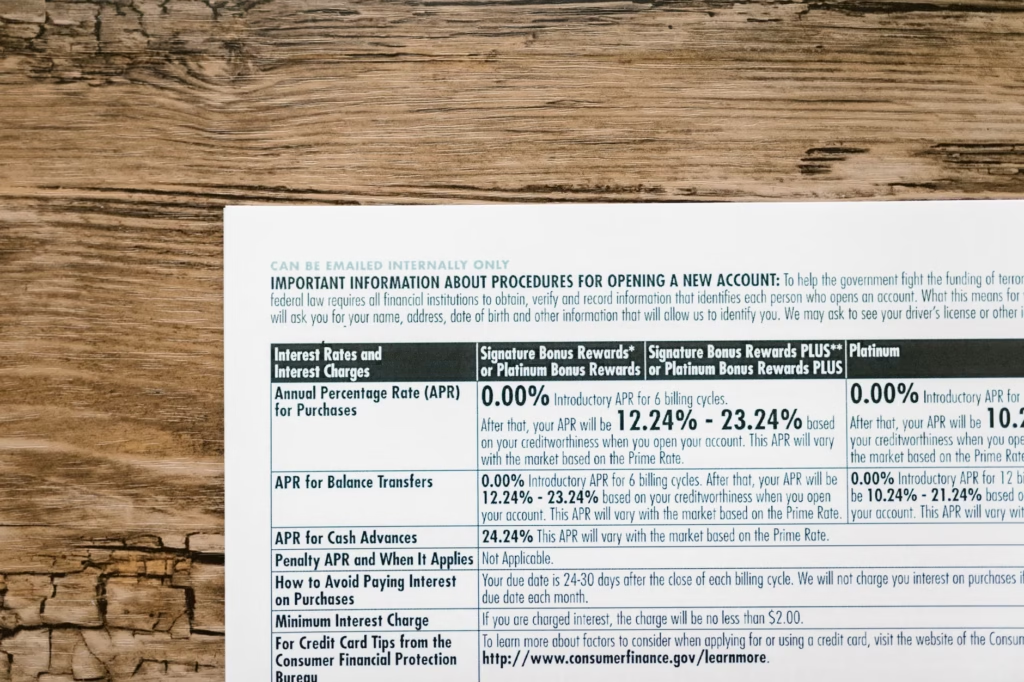
- Use a balance transfer only when the math clearly works. A low or 0 percent promotional APR can buy time, but balance transfer fees are common and promotional rates end. This strategy helps only if the fee is worth the savings and there is a realistic plan to pay down the transferred balance before the promo window closes. (consumerfinance.gov)
- Keep the payment amount alive after a card is paid off. Roll that old payment onto the next target card, and send windfalls like tax refunds, bonuses, reimbursements, or money freed up from canceled subscriptions straight to principal instead of absorbing them into regular spending.
A simple hypothetical shows why targeting matters. If one card carries a much higher APR than another, sending every dollar above the minimums to the higher-rate card will usually cut interest costs faster, even if its balance is not the smallest. But if clearing a small balance first is what keeps the plan going, that tradeoff may still be worth it. The better method is the one that survives a difficult month, not the one that looks best on paper for one week. (consumerfinance.gov)
A 15-minute reset if the budget feels too tight
If the numbers feel messy, shrink the task. CFPB guidance for payment trouble starts with adding up income and expenses, then deciding what you can actually afford before you contact the card issuer. A short reset like this is often enough to turn anxiety into a working plan. (consumerfinance.gov)
- List each card’s balance, APR, minimum payment, and due date on one page.
- Choose one target card and one realistic source of extra cash for this month, even if it is small.
- Set autopay for the minimums and schedule one extra payment to the target card right after payday.
- If the numbers still do not work, call the highest-APR issuer before the next due date and ask what relief options are available.
When DIY is no longer the fast answer
If the balance is barely shrinking even after spending cuts and extra payments, outside help may be faster than trying to grind it out alone. The FTC says a credit counseling organization may help set up a debt management plan in which creditors may lower interest rates or waive certain fees, and the borrower makes one monthly payment through the counselor. That can simplify repayment, but it still requires steady payments and can take years to complete. (consumer.ftc.gov)
Be careful with debt settlement. The FTC warns that settlement companies often tell people to stop paying creditors while money builds in a separate account. That can lead to more late fees and interest, collection activity, credit damage, and in some cases lawsuits or tax consequences on forgiven debt. Debt settlement is not the same as credit counseling, and it should not be treated as an easy shortcut. (consumer.ftc.gov)
The fastest way out of credit card debt is usually straightforward, even if it is not easy: stop adding to the balance, protect on-time minimums, choose one balance to attack aggressively, and lower the APR wherever possible. If those moves still do not create a real exit path, get help before missed payments make the problem more expensive. (consumerfinance.gov)
References
- Consumer Financial Protection Bureau – How does my credit card company calculate the amount of interest I owe? – https://www.consumerfinance.gov/ask-cfpb/how-does-my-credit-card-company-calculate-the-amount-of-interest-i-owe-en-51/
- Consumer Financial Protection Bureau – What should I do if I can’t pay my credit card bills? – https://www.consumerfinance.gov/ask-cfpb/what-should-i-do-if-i-cant-pay-my-credit-card-bills-en-1697/
- Consumer Financial Protection Bureau – Know Before You Owe: Credit cards – https://www.consumerfinance.gov/data-research/credit-card-data/know-you-owe-credit-cards/
- Federal Trade Commission – How To Get Out of Debt – https://consumer.ftc.gov/articles/how-get-out-debt